
Your child is born with a full set of 20 baby teeth already waiting beneath their gums, quietly developing long before you ever see that first tiny white bud break through. From that first tooth to the arrival of permanent molars in the early teen years, your child’s mouth goes through a remarkable transformation, and understanding what to expect at each stage makes it a lot easier to know when things are on track and when it might be time to call your dentist.
At Kids Dental Center in Chandler, Arizona, Dr. J. Rockwell Wright has dedicated his career to guiding children through every stage of dental development. With hospital-based pediatric training and board scores in the top 10% nationally, Dr. Wright and the team offer pediatric dental services designed around the unique needs of children at every age. Here is what every parent should know about how their child’s teeth grow, shift, and evolve from infancy through the teenage years.
The Primary Teeth: Birth Through Age 3
Most babies begin teething somewhere between six and twelve months of age, though some start as early as three months and others closer to their first birthday. Both ends of that range can be completely normal. The first teeth to arrive are typically the lower central incisors, followed by the upper central incisors a couple of months later. Teeth generally erupt in pairs and on both sides of the mouth at similar times.
By around age three, most children have a complete set of 20 primary teeth. These include central and lateral incisors, canines, and first and second molars on both the upper and lower arches. The American Dental Association publishes eruption charts for both primary and permanent teeth that parents can reference as a helpful guideline, though it is worth knowing that the exact timing varies from child to child. A tooth coming in a few months earlier or later than average is rarely cause for concern.
Why Primary Teeth Matter
Baby teeth are not just placeholders. They help your child chew food properly, support clear speech development, and hold space in the jaw for the permanent teeth forming below them. Healthy primary teeth also influence the alignment of the adult teeth that will eventually replace them, which is why caring for them from the very start sets the stage for a healthier smile down the road.
The Mixed Dentition Years: Ages 6 Through 12
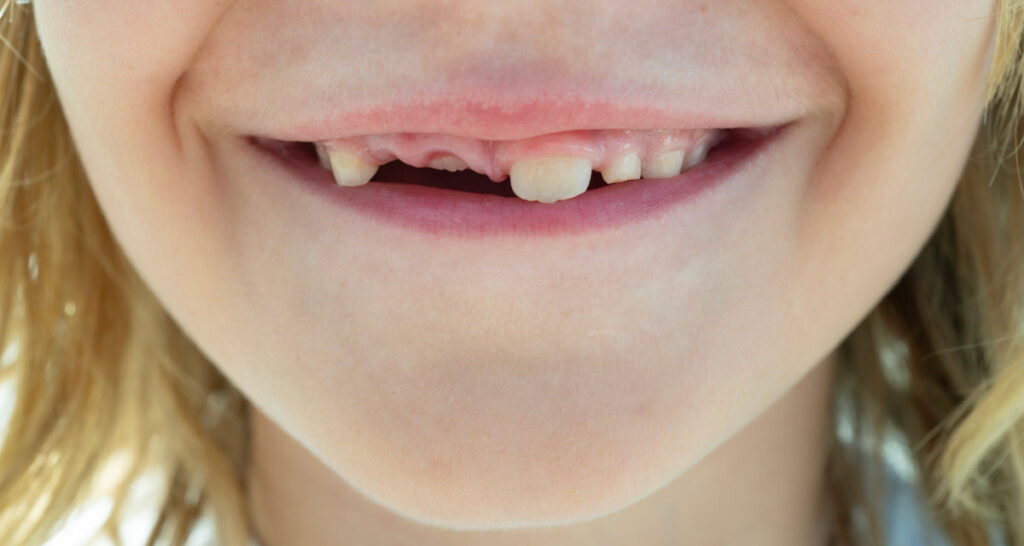
Around age six, things start to get interesting. The first permanent teeth, typically the lower central incisors and the first permanent molars, begin to emerge. At the same time, baby teeth start loosening and falling out in roughly the same order they came in. This overlap of primary and permanent teeth in the mouth is called the mixed dentition period, and it can look a little chaotic from the outside.
During these years, it is common for parents to notice a permanent tooth pushing through before the corresponding baby tooth has fully fallen out. This creates what looks like a double row of teeth, sometimes called shark teeth. Dr. Wright sees this regularly in his practice and reassures parents that it resolves on its own the majority of the time. If the baby tooth is wiggly, watching and waiting is usually appropriate. If it is firmly in place and the permanent tooth is well on its way in, a quick evaluation helps determine whether any action is needed.
What Is Coming In and When
The mixed dentition period spans roughly six years. Central incisors typically erupt between ages six and seven, lateral incisors between seven and eight, and the first permanent molars around the same time. Canines and premolars follow through the later elementary years, with second permanent molars arriving around age twelve. By the early teen years, most children have a full set of 28 permanent teeth, with wisdom teeth potentially emerging later in the late teens or early twenties.
Supporting Healthy Development Along the Way
Good oral health habits built during these developmental years have a lasting impact. Starting dental visits early, brushing twice daily with fluoride toothpaste, and limiting sugary drinks and snacks all reduce the risk of cavities that can disrupt the natural course of tooth development. Regular children’s dental cleanings and exams allow Dr. Wright to monitor eruption patterns, catch crowding or spacing concerns early, and intervene when something needs attention before it becomes a larger problem.
There are a few signs worth paying attention to as your child grows. Teeth coming in significantly out of alignment, gaps that do not seem to be closing, persistent thumb-sucking habits after age four, or a tooth that seems very delayed in arriving are all worth mentioning at your next visit. None of these things necessarily signal a problem, but they are the kind of details a pediatric dentist is trained to evaluate in the context of your child’s overall development.
Here are some age-by-age care tips to keep in mind as your child’s smile evolves:
- Infants and toddlers (birth to age 3): Wipe gums with a clean damp cloth before teeth arrive. Once the first tooth appears, brush with a rice-grain-sized amount of fluoride toothpaste and schedule that first dental visit no later than age one.
- Preschool age (ages 3 to 5): Brush twice daily with a pea-sized amount of toothpaste. Begin teaching your child to spit rather than swallow. Limit juice and sugary snacks between meals.
- Early elementary (ages 6 to 9): Supervise brushing even as independence grows. The arrival of permanent molars means sealants become relevant to discuss with your dentist.
- Tweens and teens (ages 10 and up): Reinforce twice-daily brushing and flossing as more permanent teeth arrive. An orthodontic evaluation during these years can help determine whether any alignment correction is needed.
Staying consistent with these habits across each stage keeps development on track and reduces the need for more involved treatment later.
Schedule a Visit at Kids Dental Center Today
Every child’s dental timeline is a little different, and that is exactly why having a trusted pediatric dentist in your corner matters. Dr. Wright and the team at Kids Dental Center are here to monitor your child’s development at every stage, answer your questions, and provide care that is always tailored to your child as an individual. We accept most insurance plans and offer multiple financing options to make quality care accessible for every family.
Whether your little one is still waiting on that first tooth or heading into the mixed dentition years, we would love to be your partner in their oral health journey. Contact us today to schedule an appointment and give your child the strong foundation their smile deserves.