

Got a dental emergency? Ask us about same day appointments

Digital Dental X-Rays for Kids in Chandler, AZ

Most parents have the same question when X-rays come up at a dental appointment: are they really necessary, and is the radiation safe for my child? These are the right questions to ask. The short answer is that digital dental X-rays have made pediatric imaging dramatically safer, faster, and more comfortable than the old film-based technology, and they allow Dr. Wright to catch problems that would be completely invisible during a visual examination. Without them, conditions like cavities between teeth, impacted permanent teeth, and early bone infections can go undetected until they become much harder to treat.

At Kids Dental Center in Chandler, Arizona, we use state-of-the-art digital X-ray technology as part of our commitment to giving every child the absolute best care using the latest materials and techniques. Dr. Wright applies the American Academy of Pediatric Dentistry’s guidelines on X-ray frequency, which means your child receives imaging only when there is a clear diagnostic reason. Digital X-rays are just one part of our advanced diagnostic toolkit, alongside technology like our intraoral cameras, that helps us provide thorough, precise pediatric dental care in a way children can actually understand and feel comfortable with.

Why Digital X-Rays Matter for Kids

Digital X-rays go far beyond what any visual examination can reveal. During a routine checkup, Dr. Wright can see the surfaces of teeth, the gums, and the general condition of the mouth, but a significant amount of dental disease develops where eyes cannot reach. Digital radiographs allow him to detect cavities forming between teeth before they are large enough to cause symptoms, monitor permanent teeth as they develop beneath the gums, assess jaw bone health, identify impacted teeth, spot abscesses or cysts, and evaluate the effects of any trauma or injury. Catching these conditions early almost always results in simpler, less invasive treatment.

Cavities Between Teeth
Decay that forms between contact points is invisible to the naked eye but shows clearly on a digital radiograph.

Developing Permanent Teeth
X-rays show how permanent teeth are forming beneath the gums and whether they have sufficient space to erupt properly.

Impacted Teeth
Teeth that are blocked from erupting can be identified and monitored before they cause pain, crowding, or damage to adjacent teeth.

Bone Infections and Abscesses
Infections that have spread into the jawbone or formed an abscess are visible on X-rays long before they become a dental emergency.

Cysts and Tumors
Lesions in the jaw or surrounding bone that would cause significant problems if left undetected can be spotted at a routine checkup.

Trauma and Bite Abnormalities
The effects of dental injuries and developmental issues that could affect your child’s bite and jaw structure as they grow are measurable with radiographs.

The technology also makes a real practical difference for children. Unlike old-school film X-rays that required holding uncomfortable plates in place for extended periods while the image developed, digital sensors are small, flexible, and capture images in seconds. For children who struggle to sit still, this speed is meaningful. Fewer retakes, less time in the chair, and no blurry or poorly positioned images to repeat. The result is a faster appointment and a more comfortable experience for your child.

This efficiency supports Dr. Wright’s broader approach to care at Kids Dental Center. As described on our about page, the practice is designed around the idea that every child deserves access to the latest materials and techniques, and that dental visits should feel positive rather than stressful. Digital X-ray technology supports both goals by making diagnostics faster, more accurate, and far less intimidating than the equipment many parents remember from their own childhoods.

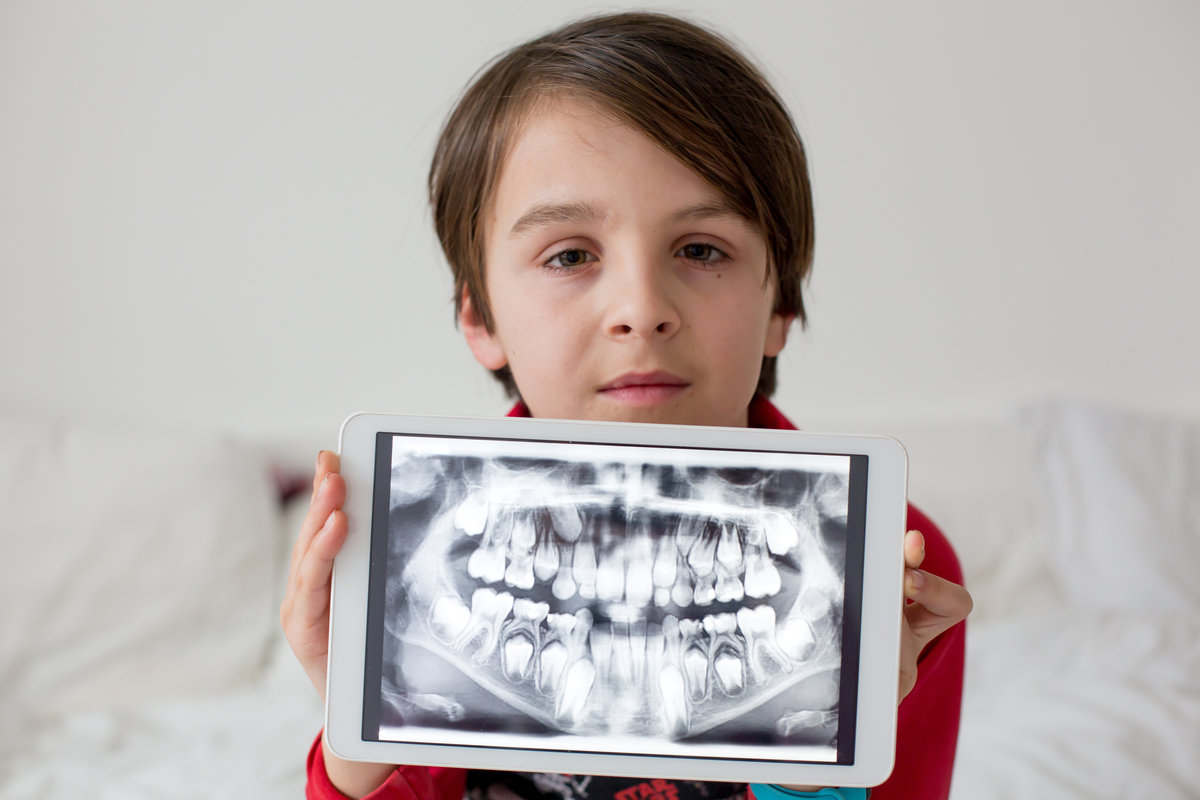
Child, preteen boy, holding tablet with a picture of his x-ray teeth from the dentist

What Digital X-Ray Technology Means for Your Child

Faster, More Comfortable Imaging

Digital sensors capture images in seconds, eliminating the wait and repeated positioning that made old film X-rays so frustrating for young patients. Less time in the chair means less fidgeting and less stress for everyone.

Significantly Lower Radiation

Digital X-rays produce significantly less radiation than conventional film X-rays, and the American Dental Association’s 2024 updated guidelines confirm that modern digital equipment and precise beam targeting are the most effective radiation protection measures available.

Instant On-Screen Results

Images appear on a screen the moment they are taken. Dr. Wright can zoom in, adjust contrast, and show you and your child exactly what is happening inside the mouth — turning a diagnostic step into an educational moment.

Shareable Digital Records

Digital files are securely stored and easily shared with orthodontists, oral surgeons, or other specialists in seconds. No lost films, no delays, and no need to repeat X-rays when your child sees another provider.

medicine, dentistry and healthcare concept. x-ray machine scanning kid patient teeth at dental clinic

The Safety Advantage Every Parent Should Know

Radiation is the first concern most parents raise about dental X-rays, and it is completely reasonable. Here is what the current evidence says: digital dental X-rays produce significantly less radiation than conventional film X-rays, and the exposure from a full set of digital images is lower than what your child receives from a cross-country flight. The American Dental Association’s updated 2024 safety guidelines affirm that modern digital X-ray equipment, combined with precise beam targeting that limits the field to only the area being imaged, provides effective radiation protection for patients of all ages.

One detail from those 2024 ADA guidelines is worth knowing: the expert panel concluded that lead aprons and thyroid collars are no longer recommended as a radiation protection measure during dental X-rays. Modern digital equipment and focused beam technology protect patients more effectively than shielding, and lead aprons can actually interfere with image quality. Kids Dental Center follows current evidence-based guidelines, which means we apply the protection measures that research has confirmed actually work.

people, medicine, stomatology, technology and health care concept - dentist with x-ray on tablet pc computer and girl patient

What Happens During Your Child's Digital X-Ray

Digital X-ray appointments at Kids Dental Center are quick, comfortable, and often become a highlight of the visit for curious kids. Here is what to expect:

  • A small digital sensor is positioned gently in your child’s mouth to capture the specific area Dr. Wright needs to examine. Sensors are smaller and more flexible than old film plates, and the image is captured in seconds.
  • No lead apron is required. Per the ADA’s 2024 updated guidelines, modern digital equipment and precise beam targeting are the evidence-based standard of radiation protection. Kids Dental Center follows current clinical recommendations.
  • The image appears on screen immediately. Dr. Wright can enlarge, adjust brightness and contrast, and walk through exactly what he is seeing. Many children find this genuinely interesting and ask questions about their own teeth.
  • The entire process takes just a few seconds per image. A full set of diagnostic X-rays is typically completed in a few minutes, with no waiting, no darkroom developing, and no repeated exposures for blurry images.

Dr. Wright explains what he is looking for before and during the process, using age-appropriate language to keep your child informed and involved rather than anxious. The transparency is intentional. Children who understand what is happening are more cooperative, less frightened, and more likely to develop a positive relationship with dental care that carries into adulthood.

Frequently Asked Questions About Digital X-Rays

How often does my child need dental X-rays? +
The American Academy of Pediatric Dentistry recommends that X-ray frequency be based on each child’s individual needs rather than a fixed schedule. Children with healthy teeth and a low cavity risk typically need X-rays every one to two years. Children at higher risk due to a history of cavities, orthodontic treatment, or developmental concerns may need imaging more frequently. Dr. Wright evaluates your child’s risk profile at each checkup and recommends the minimum necessary imaging to get the diagnostic information needed.
Are digital X-rays safe for my child? +
Yes. The radiation exposure from a full set of digital dental X-rays is extremely low, significantly less than from conventional film X-rays, and less than what your child receives from everyday background radiation sources. The ADA’s 2024 updated safety guidelines confirm that modern digital equipment and precise beam targeting effectively minimize radiation exposure. X-rays are only taken when the diagnostic benefit outweighs any risk, and Dr. Wright applies this principle at every visit.
What can dental X-rays detect that a regular exam cannot? +
Dental X-rays reveal conditions that cannot be seen during a visual examination alone. These include cavities developing between teeth, impacted or erupting permanent teeth, bone infections and abscesses, cysts or tumors, bone injuries from trauma, early signs of gum disease, and developmental abnormalities that could affect your child’s bite or jaw structure as they grow. Catching these issues early typically means simpler, less invasive, and more affordable treatment.
Will my child need to wear a lead apron? +
Not necessarily. The American Dental Association’s 2024 updated guidelines state that lead aprons and thyroid collars are no longer recommended as radiation protection during dental X-rays. Modern digital X-ray equipment and focused beam technology protect patients more effectively than shielding, and lead aprons can interfere with image quality by blocking part of the primary beam. Kids Dental Center follows current evidence-based clinical guidelines.
How does digital X-ray differ from traditional film X-ray? +
Film X-rays required children to hold uncomfortable plates in their mouths while the image developed in a darkroom, a process that often took minutes and sometimes required multiple attempts if the image was blurry or misaligned. Digital sensors are smaller, more flexible, and capture images in seconds. The results appear immediately on screen, where Dr. Wright can zoom in, adjust contrast, and annotate exactly what he wants to show you. Digital files are also stored securely and shareable with specialists instantly.
Does insurance cover dental X-rays for children? +
Most dental insurance plans cover routine diagnostic X-rays for children as part of preventive or diagnostic care. Coverage frequency and benefit amounts vary by plan. Kids Dental Center accepts most major insurance plans and our team is happy to verify your benefits before your child’s appointment. For families without coverage or those with out-of-pocket costs, we offer flexible financing options to make sure cost is never a barrier to complete dental care.

Advanced Diagnostic Tools Beyond Basic X-Rays

Digital X-ray technology at Kids Dental Center goes well beyond capturing a static image. The software allows Dr. Wright to compare radiographs taken at different appointments side by side, making it easy to track how a developing cavity or an incoming permanent tooth is progressing over time. This longitudinal view is especially valuable for monitoring growth patterns and evaluating the results of orthodontic treatment.

Digital files are also instantly shareable. If your child needs a referral to a specialist, Dr. Wright can transmit high-resolution images securely in seconds. No waiting for physical films, no risk of images being lost or damaged, and no need to repeat X-rays because the originals did not arrive. This is a practical benefit that saves time and keeps your child’s care coordinated across providers.


How Often Does Your Child Actually Need X-Rays?


This is one of the most common questions parents ask, and the honest answer is: it depends. The American Academy of Pediatric Dentistry does not prescribe a one-size-fits-all schedule. Instead, frequency is based on your child’s individual cavity risk, whether they have had dental problems in the past, how their teeth are developing, and whether any concerns appeared during the visual exam. Children with healthy teeth and a low cavity risk may need X-rays as infrequently as every one to two years. Children with active cavities, orthodontic treatment, or developmental concerns may need imaging every six months.

Dr. Wright reviews your child’s history at every appointment and recommends the minimum imaging needed to get the information that benefits their care. Digital technology’s low radiation profile means we can take X-rays when they are genuinely useful without the concern that used to come with more frequent film-based imaging.


Making Dental X-Rays a Positive Experience


At Kids Dental Center, we work hard to make every part of a dental visit feel manageable for children, and X-rays are no exception. Our team explains the process using age-appropriate language, and the instant on-screen display actually becomes a tool for engagement. Many kids are genuinely curious when they see their own teeth on a screen. Dr. Wright uses that curiosity to talk through what he is seeing, which builds familiarity with dental care and reduces anxiety over time.

Families from across Chandler and the surrounding area also appreciate that we accept most major insurance plans and offer flexible financing. We believe access to the best diagnostic technology should not depend on your family’s financial situation. Every child who walks through our doors gets the benefit of Dr. Wright’s training, our digital imaging system, and a team that genuinely understands how to work with kids at every developmental stage.
Schedule Your Child’s Next Appointment at Kids Dental Center
Digital X-rays, intraoral cameras, and a team trained to care for children at every age. Call Kids Dental Center in Chandler today.

Expertly Reviewed by:

Kids Dental Center, Chandler, AZ

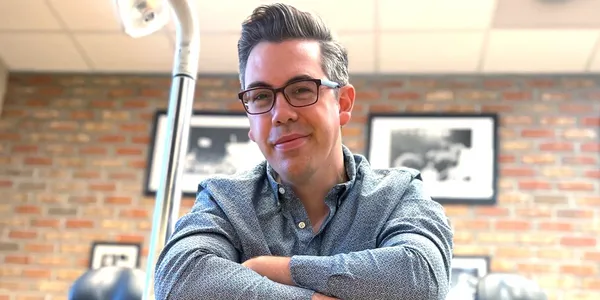
Dr. Wright is a pediatric dentist and the owner of Kids Dental Center in Chandler, Arizona. He is dedicated to providing the highest quality dental care for children using the latest materials and techniques.

📅 June 2026

Dr. Wright, pediatric dentist at Kids Dental Center

Frequently Asked Questions

How often does my child need dental X-rays?
The American Academy of Pediatric Dentistry recommends that X-ray frequency be based on each child’s individual needs rather than a fixed schedule. Children with healthy teeth and a low cavity risk typically need X-rays every one to two years. Children at higher risk due to a history of cavities, orthodontic treatment, or developmental concerns may need imaging more frequently. Dr. Wright evaluates your child’s risk profile at each checkup and recommends the minimum necessary imaging to get the diagnostic information needed.
Yes, digital dental X-rays are safe for children. The radiation exposure from a full set of digital dental X-rays is extremely low, and significantly less than from conventional film X-rays. The American Dental Association’s 2024 updated safety guidelines confirm that modern digital equipment and precise beam targeting effectively minimize radiation exposure. X-rays are only taken when the diagnostic benefit outweighs any risk, and Dr. Wright applies this principle at every visit.
Dental X-rays reveal conditions that cannot be seen during a visual examination alone. These include cavities developing between teeth, impacted or erupting permanent teeth, bone infections and abscesses, cysts or tumors, bone injuries from trauma, early signs of gum disease, and developmental abnormalities that could affect your child’s bite or jaw structure as they grow. Catching these issues early with X-rays typically means simpler, less invasive, and more affordable treatment.
Contact Us

This site is protected by reCAPTCHA and the Google Privacy Policy and Terms of Service apply.

Click here to contact us!

This site is protected by reCAPTCHA and the Google Privacy Policy and Terms of Service apply.