
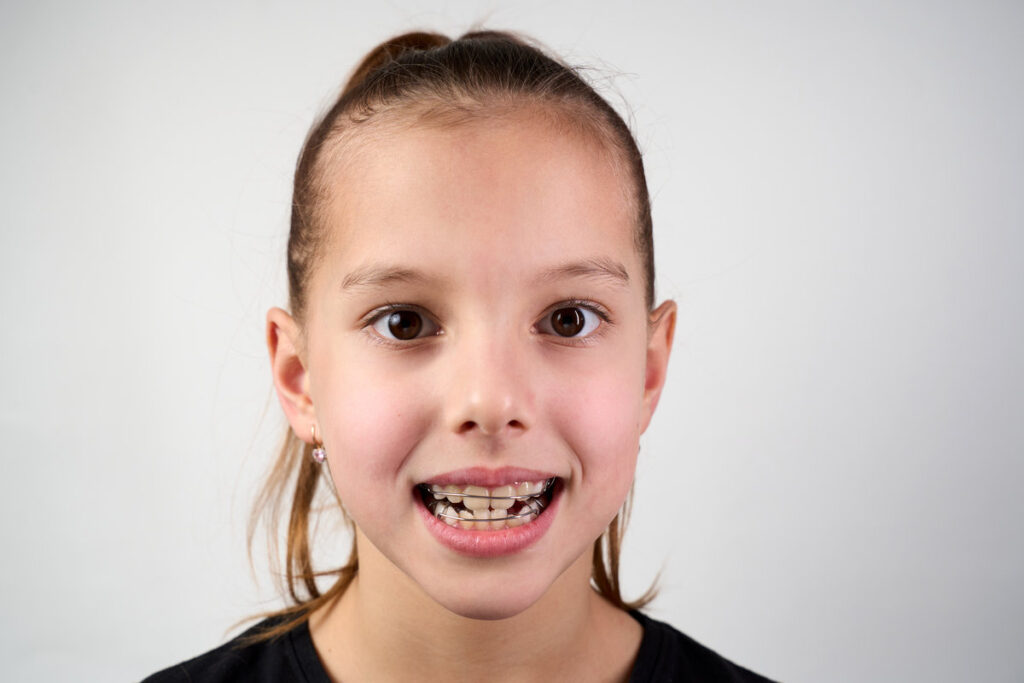
You notice it during a normal Tuesday morning, brushing your child’s teeth before school: one front tooth sits noticeably farther back than the other, or their bite just does not seem to line up the way it should. Most children benefit from an early orthodontic screening around age seven, when the mix of baby and permanent teeth gives us a clear window into how the jaw and bite are developing.
At Kids Dental Center, we build this kind of evaluation directly into our approach to pediatric orthodontic evaluation, so you are never left guessing about timing on your own. Rather than waiting for a problem to become obvious, we look for the early clues while your child is still in mixed dentition, when a crossbite, crowding pattern, or habit like thumb sucking is far easier to guide than to correct later. Our team walks you through exactly what we are seeing at each visit, in plain language, so you understand not just whether treatment is needed but why now is or is not the right moment. That way, whether your child needs early intervention or simply a plan to check back in as their smile develops, you leave with a clear next step instead of more questions.
Why Age Seven Is the Sweet Spot for a First Look
Age seven tends to be the moment when a child has enough permanent teeth erupting alongside their remaining baby teeth to give us a real picture of what is coming. According to the American Academy of Pediatric Dentistry, management of the developing dentition through each stage, including the primary and mixed dentition years, gives providers the diagnostic information needed to decide on timing, sequence, and appropriateness of any intervention.
This is not about rushing every child into treatment, and it does not need to feel stressful for you or your child. Many kids screened at this age simply get a green light and a plan to check back in as they grow. The value is in catching problems while the jaw still has active growth to work with, since some issues are far easier to guide at seven than to correct at thirteen. We treat this evaluation as a relaxed, standard part of watching your child’s smile develop, alongside the routine work we already do during cleanings and exams.
Reasons We Recommend an Early Orthodontic Evaluation
Several specific patterns prompt us to bring in extra orthodontic attention well before the teenage years. A crossbite, where the upper and lower teeth do not meet correctly from side to side, can affect jaw growth if it goes unaddressed. Severe crowding, noticeable protrusion, an open bite, or a deep bite are all signs that the way the teeth are coming in may need some early guidance rather than a wait-and-see approach.
Timing of tooth loss matters too. When baby teeth fall out unusually early or late, or when a permanent tooth erupts in the wrong position (something we call ectopic eruption), the spacing for the rest of the smile can shift in ways that are harder to correct later. Certain habits play a role as well, including prolonged thumb sucking, mouth breathing, and tongue thrust, all of which can influence how the jaw and palate develop over time. If a habit like thumb sucking needs extra support to break, we also offer habit-breaking appliances as part of that plan.
Signs Parents Can Watch for at Home
You do not need any special training to notice some of the earliest clues. Difficulty biting or chewing certain foods, or a sense that the top and bottom teeth simply do not fit together the way they should, are both worth mentioning at your child’s next visit. Crowding, teeth that stick out further than the others, or a midline that has visibly shifted are also signs that a closer look may be worthwhile.
Speech issues alongside bite problems deserve a mention too, even though the two are not always connected. If your child has both an obvious speech pattern and a bite that looks off, it is worth bringing up so we can screen for a connection. Watching for these signs helps you flag concerns early instead of waiting until they become bigger issues:
- Difficulty biting or chewing: Your child struggles to bite into or chew certain foods comfortably.
- Teeth that do not fit together: The upper and lower teeth do not meet evenly when your child closes their mouth.
- Visible crowding or protrusion: Teeth appear crowded, twisted, or stick out further than the rest.
- Shifting midline: The center line between the front teeth no longer lines up between upper and lower jaws.
- Speech changes paired with bite issues: A noticeable speech pattern shows up alongside a bite that looks uneven.
If you spot any of these signs, mentioning them at your next appointment gives us the chance to look closer and decide whether further evaluation makes sense.
How We Think About Phase One Versus Phase Two Treatment
Once we have completed an evaluation, we explain what we are seeing in terms that make sense for your family, and that usually means talking about phase one and phase two treatment. Phase one, sometimes called growth guidance, happens while a child still has significant jaw growth ahead of them. This phase focuses on issues like crossbites or severe crowding that respond well to early intervention, using the growth process itself as an ally rather than fighting against it later.
Phase two refers to full braces later on, once most or all of the permanent teeth have erupted, and we always walk you through what that timeline looks like well before your child reaches it. Not every child needs phase one. Many will simply be monitored through routine visits, sometimes with the help of space maintainers if a baby tooth is lost early, until they are ready for whatever phase two brings.
Let Kids Dental Center Guide Your Child’s Orthodontic Timeline
Every child’s mouth develops on its own schedule, and that is exactly why we build orthodontic evaluations into the care we already provide rather than treating them as a separate, intimidating step. Our team looks at the full picture, from tooth eruption patterns to jaw growth to the habits that shape a developing bite, so you get a clear, stress-free answer about whether now is the time to act or simply the time to keep watching.
If you have noticed any of the signs above, or simply want peace of mind about your child’s dental development, Kids Dental Center is ready to help you figure out the right next step. Reach out through our contact form to schedule an evaluation, and let’s map out what your child’s smile needs together.