
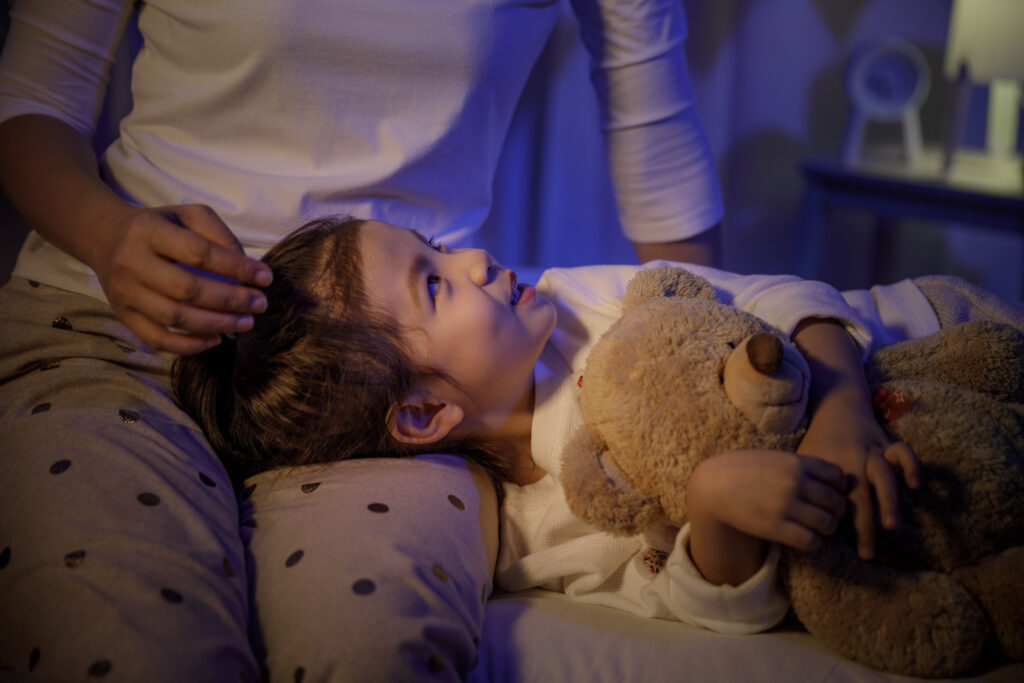
Your child finally seems to be asleep, but the quiet does not last. There is a loud snore, then a pause, then a small gasp as breathing starts again. Nights like this can feel unsettling for a parent to watch, especially when mornings bring a groggy, irritable child who says a headache is already there before breakfast.
At Kids Dental Center, we look at more than teeth during every visit. A child’s mouth, jaw, and airway all work together, and signs of trouble in one area often show up as trouble in another. Because of this, we pay close attention to what happens at night, since bedtime patterns can point to airway concerns long before a parent connects the dots.
Why We Watch The Airway So Closely
Breathing through the mouth instead of the nose dries out saliva that would otherwise protect the teeth and gums, which raises the risk of cavities, gum irritation, and persistent bad breath. A dry mouth cannot rinse away food particles and bacteria the way a well-hydrated one can, so a child who mouth-breathes every night is fighting an uphill battle against decay before we even see them in the chair.
Poor sleep quality reaches beyond the mouth as well. When a child is not getting restful sleep, we often see it show up as irritability, trouble focusing at school, or a general lack of energy during the day. Growth and inflammation throughout the body are also tied to sleep quality, so an airway issue left unaddressed can ripple into a child’s overall health and development.
Red Flags We Ask Parents To Watch For At Night
Most parents are not in the room monitoring every breath, and they should not have to be. Still, a few patterns tend to stand out enough that they are worth a mention at the next visit. According to the American Academy of Pediatric Dentistry, loud snoring three or more nights a week, witnessed pauses in breathing, restless sleep, bed wetting in an older child, night sweating, and morning headaches are all signs that deserve a closer look.
- Snoring most nights of the week, especially when it is loud enough to hear from another room
- Gasping or brief pauses in breathing during sleep
- Restless sleep with frequent position changes or tangled sheets by morning
- Bed wetting in a child who has otherwise outgrown it
- Night sweats that soak through pajamas or sheets
- Morning headaches that show up before the school day even starts
Grinding at night, a noticeably narrow palate, and a habit of sleeping with the mouth hanging open are three more patterns that tend to travel together. When we see all three in the same child, it raises our suspicion that the airway itself may be part of the story rather than just a teeth-grinding habit on its own.
Signs We Look For Inside The Mouth
A high, narrow palate can be a clue that a child has been breathing through the mouth for a long time, since the tongue normally rests against the roof of the mouth and helps guide its shape during growth. Crowded teeth and an anterior open bite, where the front teeth do not quite meet even when the back teeth are closed together, can point in the same direction.
Chapped lips that never seem to heal, gum tissue that looks inflamed even with decent brushing habits, and a cavity rate that seems high for a child’s age and diet are all things we take note of during an exam. None of these signs alone confirms an airway problem, but together they help us build a fuller picture of what might be going on while a child sleeps.
What Happens After We Spot These Signs
Our approach starts with a thorough screening during a regular visit. We look closely at tonsil size, tongue posture, palate shape, and any visible signs of nasal obstruction, and we ask parents about the bedtime patterns described above. This gives us a clearer sense of whether further evaluation makes sense.
When the signs point toward a possible airway issue, we refer families to trusted partners such as an ear, nose, and throat specialist, a sleep physician, or a pediatrician, depending on what the situation calls for. Every child is different, so the right next step depends on the specific findings from the exam and from any outside evaluation. Some children may benefit from orthodontic expansion, myofunctional therapy, or ongoing management with an ENT specialist, while others may need little more than a season of monitoring.
We never diagnose sleep apnea ourselves, since that requires a sleep study and a physician’s evaluation, but we see our role as an early warning system. A dental visit happens more often than an annual physical for most families, which puts us in a good position to catch small clues before they grow into bigger concerns.
Kids Dental Center Is Here To Help You Sort It Out
No parent wants to overreact to a little snoring, and no parent wants to overlook something that could affect their child for years to come. That is exactly why we built airway screening into the visits we already do, so families do not have to carry that judgment call alone.
If bedtime at your house sounds like any of the patterns described here, our team would welcome the chance to take a look. Reach out to Kids Dental Center, and we will walk you through what a screening involves and what, if anything, comes next.