Got a dental emergency? Ask us about same day appointments

Emergency Pediatric Dental Care Gilbert, AZ

A toddler who won’t stop pulling at their cheek, a baby who suddenly refuses a bottle, or a young child who bites down on a toy and starts bleeding from the mouth can all leave a Gilbert parent unsure whether the situation calls for a dentist right now or a wait-and-see approach. Young children often can’t explain what hurts or where, which makes it harder for parents to judge how serious something actually is.

Kids Dental Center works with families throughout Gilbert and the Chandler area, and much of what we see in urgent visits involves the youngest patients rather than older kids on the ball field. Babies and toddlers communicate distress differently than school-age children, so our team pays close attention to behavioral cues, feeding changes, and sleep disruption alongside the physical exam when something seems off. A child too young to describe pain still shows it, and catching those signals early often means a simpler, less invasive fix.

Emergencies That Look Different in Very Young Children

Older kids tend to have clear-cut dental emergencies: a knocked-out tooth, a visible crack, a sharp pain they can point to. Infants and toddlers present differently, and a Gilbert parent might not immediately connect fussiness, refusal to eat, or a swollen gum with something a dentist needs to see.

Teething pain that seems unusually intense or one-sided, a gum that looks bruised or discolored after a fall, or a bottle-fed infant who suddenly resists feeding can all point to an underlying dental problem rather than typical teething. Pacifier or thumb habits that continue too long can also lead to bite problems that occasionally require a same-day evaluation, particularly if a child injures the roof of the mouth or front teeth while using one. Our habit-breaking appliances address the long-term effects of these habits, but an acute injury connected to one still counts as an emergency worth calling about right away.

Early childhood cavities left unaddressed can also progress to the point of causing facial swelling or fever, which qualifies as urgent even though the original cavity may have gone unnoticed for weeks. This is part of why we recommend a child’s first dental visit well before problems become obvious, and why our infant oral health exams start tracking a child’s mouth from the very first tooth.

What Happens During an Infant or Toddler Emergency Visit

Treating a very young child in an emergency setting takes a different approach than treating a school-age child, because toddlers and infants can’t sit still for a lengthy exam on command. We adjust pacing, positioning, and even lighting to keep a young child calmer, and a parent staying close by often makes the biggest difference in how the visit goes.

A gentle knee-to-knee exam, where a parent and dentist sit facing each other with the child positioned between them, works well for very young patients who need a closer look without feeling restrained. If a cavity has progressed far enough to need treatment, we walk families through the mildest option first and reserve more involved care, such as pulp therapy, for situations where the tooth’s nerve has already been affected.

We tell families the following during nearly every early childhood emergency visit.

  • What we found: A plain explanation of the specific issue, shown with a mirror or photo when possible.
  • Why it happened: Context on teething, habits, diet, or trauma that may have contributed.
  • What we recommend: The least invasive option that still protects the tooth and surrounding gum.
  • What to watch for: Signs that would mean a follow-up call is needed sooner than planned.
  • How to prevent a repeat: Practical adjustments at home, from feeding habits to pacifier weaning.

Sharing this information clearly tends to calm parents just as much as it helps guide what happens next, because most families leave more confident once they understand the full picture. Prevention helps too, and the American Academy of Pediatric Dentistry recommends a first dental visit within six months of a child’s first tooth and no later than 12 months of age, which can help catch problems before they turn into emergencies.
Helping Your Child at Home Before and After the Visit

What a parent does in the hours before and after an emergency visit can shape how a young child experiences the whole situation. Staying calm yourself matters more than most parents realize, because toddlers pick up on a caregiver’s anxiety quickly and often mirror it, which can make an already upsetting moment feel worse for everyone involved.


Before the visit, avoid giving a young child anything to eat or drink beyond water if a procedure might require sedation, and bring along a comfort item such as a favorite toy or blanket to help ease the transition into an unfamiliar setting. Simple, honest language works best when explaining what will happen, because vague reassurances or surprise visits tend to build more distrust than a short, calm explanation beforehand.


After the visit, watch for any numbness wearing off if a local anesthetic was used, because young children sometimes bite or chew the numb area without realizing it, which can cause an unintended injury on top of the original problem. A soft diet for the rest of the day, gentle brushing near any treated area, and a little extra patience with naps or bedtime routines usually help a young child settle back into their normal rhythm within a day or two.

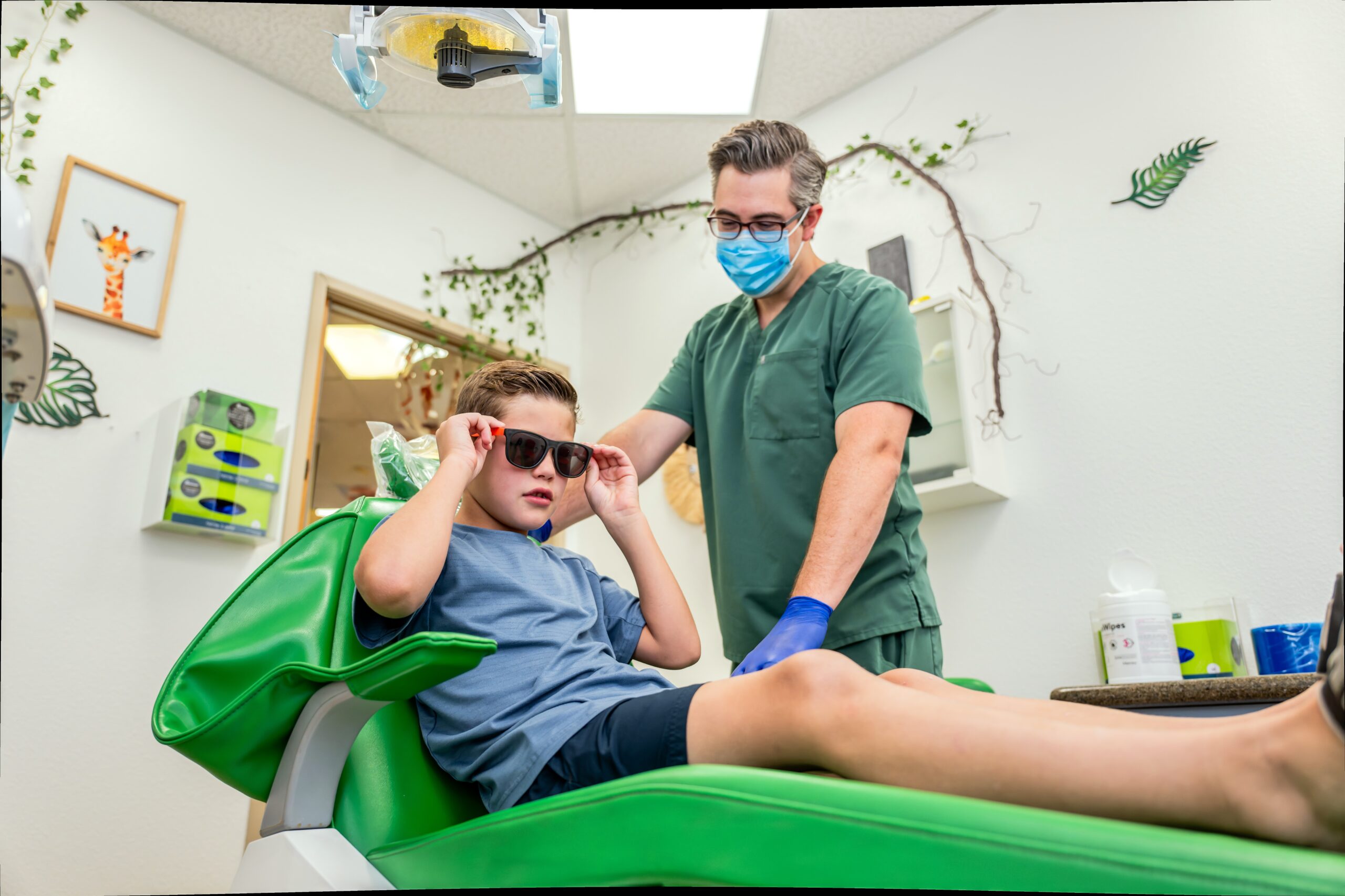
Child in a dental chair putting on sunglasses while the dentist stands beside him
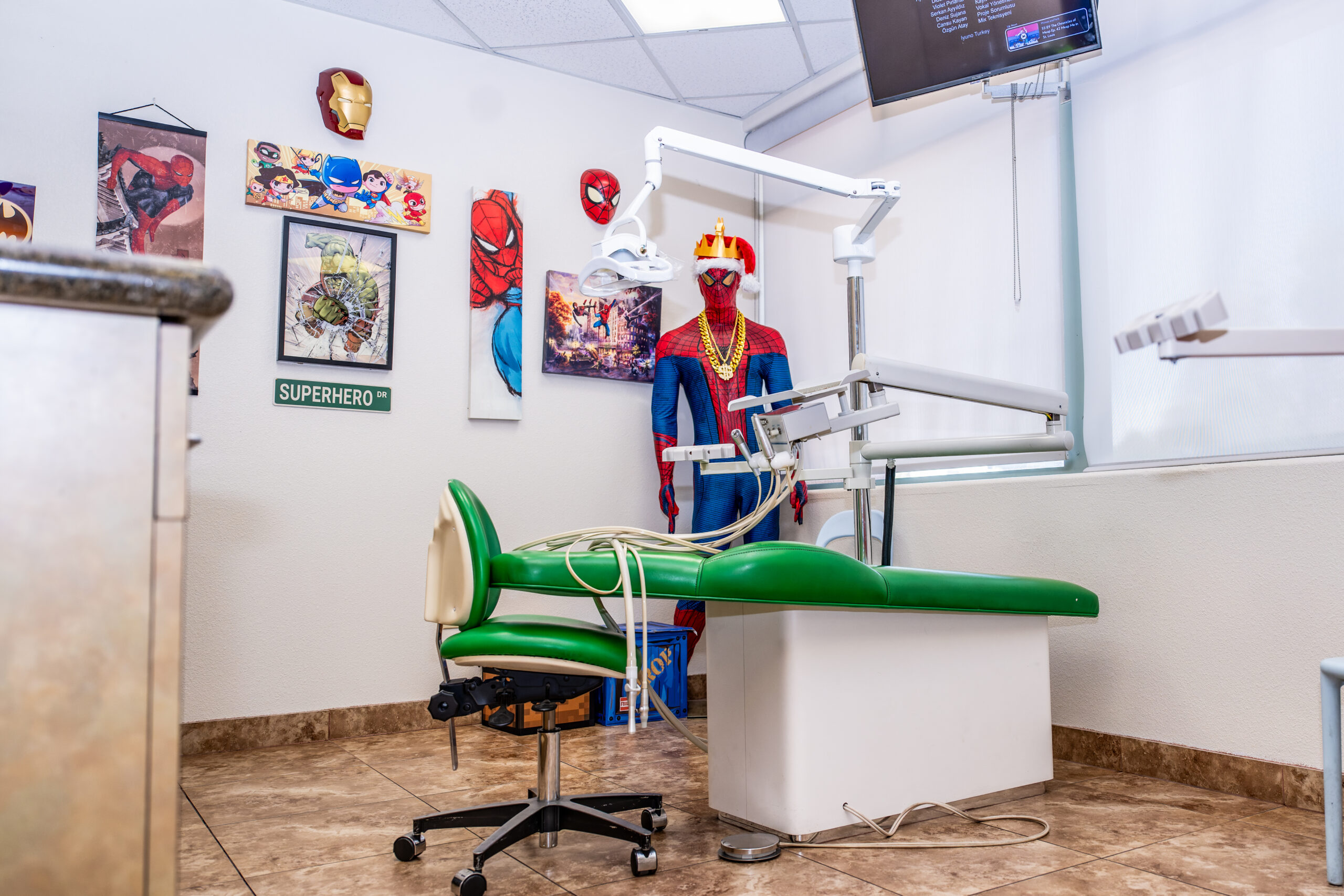
Dental exam chair in a superhero-themed treatment room at Kids Dental Center

Kids Dental Center Supports Gilbert Families From the Very First Tooth

Gilbert parents trust Kids Dental Center because we treat infants and toddlers with the same seriousness as older kids, never brushing off a young child’s discomfort as something that will simply pass. We do our best to accept nearly every PPO plan, and financing options, including in-house plans, CareCredit, and Cherry Financing, are available for families who want care without delay, because no child should go without treatment over cost.

If something seems wrong with your infant or toddler’s mouth, please contact our office so we can help you figure out the next step.

What to Do Right Now in a Dental Emergency

When a child has a dental emergency, the first few minutes matter. Stay calm, because children take their cues from you, and check for signs that call for a hospital instead of a dentist, such as trouble breathing, a head injury, or bleeding that does not slow after firm pressure. If none of those apply, call our office at (480) 782-5437 so we can guide you from there.

A knocked-out permanent tooth is one of the few true emergencies in dentistry. According to guidelines from the International Association of Dental Traumatology that the American Academy of Pediatric Dentistry endorses, putting the tooth back right away is the best treatment at the place of the accident when it can be done safely, and the tooth should be handled by the crown rather than the root. Baby teeth are different, because primary teeth should not be put back in. If you are not sure which kind of tooth it is, keep it moist in milk and call us right away.

The graphic and table below summarize common situations. They are a general guide, not a substitute for a call to our office.

Is It an Emergency?

A quick way to decide who to call first.

Call 911 or Go to the ER
  • Trouble breathing or swallowing
  • Swelling that spreads toward the eye or neck
  • A head injury or loss of consciousness
  • A suspected broken jaw
  • Bleeding that does not slow after firm pressure
Call Us Right Away
  • A knocked-out permanent tooth
  • A tooth pushed out of place or loosened by an injury
  • Facial swelling, with or without fever
  • Severe or worsening tooth pain
Call Us as Soon as Possible
  • A chipped or cracked tooth
  • A knocked-out baby tooth
  • A mild toothache
  • A mouth injury from a pacifier or toy

This is a general guide only. When you are unsure, call us at (480) 782-5437 and we will help you decide.

Common Dental Emergencies and First Steps
SituationWhat to Do FirstWhen to Call Us
Knocked-out permanent toothHold the tooth by the crown, not the root. Rinse gently if dirty, and put it back in the socket if you can do so safely. If not, keep it moist in milk.Right away. Time matters.
Knocked-out baby toothDo not put it back in. Press clean gauze on the area to control bleeding.As soon as possible
Chipped or broken toothRinse with water, save any pieces, and use a cold compress on the cheek.As soon as possible, and right away if there is pain or bleeding
ToothacheRinse with warm water and gently remove any trapped food. Ask us or your pediatrician what pain relief is right for your child's age and weight.Right away if pain is severe or comes with swelling or fever
Bitten lip, tongue, or cheekClean the area with water and apply firm pressure with clean gauze. A cold compress can help with swelling.If it is deep, or go to the ER if bleeding does not slow

Frequently Asked Questions About Pediatric Dental Emergencies

Parents often have the same questions when something goes wrong, so here are answers to the ones we hear most.

What counts as a pediatric dental emergency?

A knocked-out permanent tooth, an injury that loosens or displaces a tooth, facial swelling, severe pain, and bleeding from the mouth after an injury all call for prompt attention. When you are unsure, call us and we will help you decide on next steps.

What should I do if my child knocks out a tooth?

First find out whether it is a baby tooth or a permanent tooth. Baby teeth should not be put back in. For a permanent tooth, hold it by the crown, rinse it gently if it is dirty, and put it back in the socket if you can do so safely, or keep it moist in milk. Then call us right away, because time matters.

Should I go to the ER or call the dentist?

Go to an emergency room or call 911 for trouble breathing or swallowing, swelling that spreads toward the eye or neck, a head injury, a suspected broken jaw, or bleeding that does not slow after firm pressure. For most other tooth problems, call us first.

Do you see babies and toddlers in an emergency?

Yes. Young children often cannot explain what hurts, so we pay attention to feeding changes, fussiness, and sleep disruption along with the exam. Call us if something seems off with your child's mouth.

Can I walk in for an emergency?

We welcome walk-ins, although calling ahead at (480) 782-5437 is even better because it lets our team know you are on your way.

Does insurance cover emergency dental visits?

Coverage varies from plan to plan. We do our best to accept nearly every PPO plan and offer financing options, so call us to talk through your coverage.

Choosing Kids Dental Center for Emergency Care

Gilbert parents trust Kids Dental Center to take a young child’s discomfort seriously, whether the problem is a knocked-out tooth, a swollen gum, or pain that a toddler cannot put into words. Our team focuses on keeping visits fun and stress-free, because we believe kids deserve the absolute best care.

If your child has a dental emergency, call (480) 782-5437 and we will help you figure out the next step. We welcome walk-ins, although calling ahead is even better, and you can also request an appointment online. For trouble breathing or a severe injury, call 911 or go to the nearest emergency room.

Our Chandler, AZ Office

Address: 2900 W Ray Rd Suite 2, Chandler, AZ 85224

Hours: 

  • Monday, 8:30 AM–5 PM
  • Tuesday, 8:30 AM–5 PM
  • Wednesday, 8:30 AM–5 PM
  • Thursday, 8:30 AM–5 PM
  • Friday, 9 AM–2 PM
  • Saturday, Closed
  • Sunday, Closed

Reviews from Gilbert & Chandler Families

Kids Dental Center

4.7

Contact Us

This site is protected by reCAPTCHA and the Google Privacy Policy and Terms of Service apply.

Click here to contact us!

This site is protected by reCAPTCHA and the Google Privacy Policy and Terms of Service apply.