
When a tooth gets knocked out, the clock starts immediately. Most parents have never been in this situation before, and panic is a natural response. But the actions taken in the first 30 minutes after a tooth avulsion, the clinical term for a tooth completely knocked out of its socket, can determine whether that tooth can be saved.
At Kids Dental Center, Dr. Wright and the team provide pediatric dental services including emergency care for exactly these situations. Knowing what to do before you walk through the door gives the tooth its best possible chance. Here is a clear, step-by-step guide to follow if your child experiences this type of dental injury in Chandler or the surrounding area.
Understanding Dental Trauma in Children
Dental injuries are more common in children than most parents realize. Research from the American Academy of Pediatrics indicates that by age 14, approximately 30% of children have experienced a dental injury. These injuries happen during sports, playground activities, accidents at home, and simple falls. Complete avulsion, where a tooth is knocked entirely out of the socket, is the most serious of these injuries and requires the fastest response.
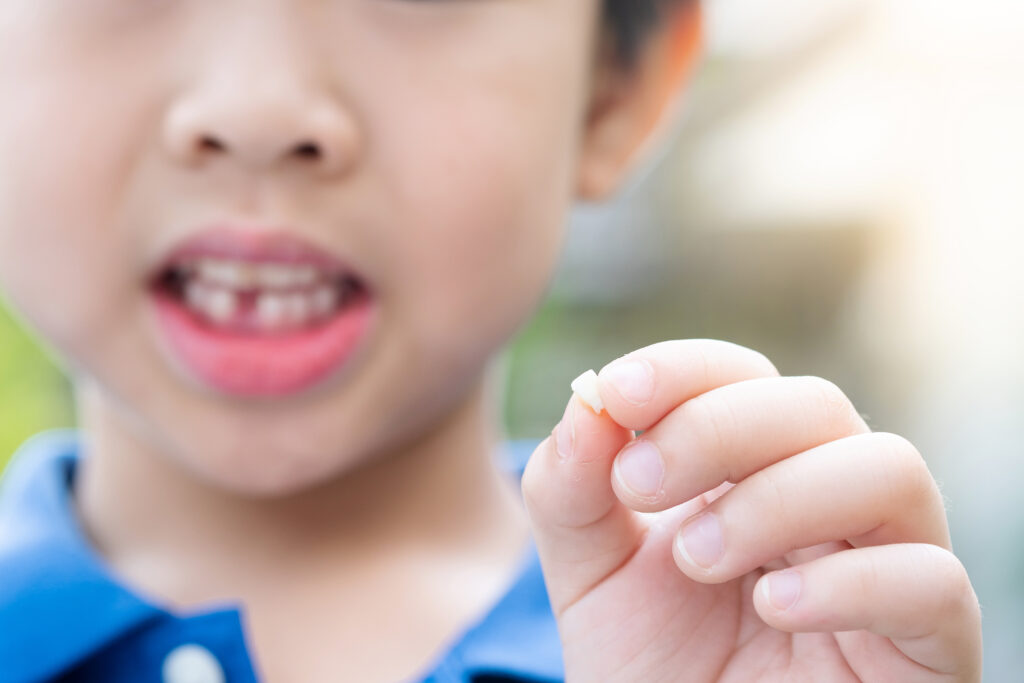
The type of tooth matters enormously. A knocked-out permanent tooth and a knocked-out baby tooth require completely different responses, and mixing them up can cause harm. Baby teeth are never put back into the socket. Permanent teeth can often be saved when handled correctly and quickly. Knowing which you are dealing with is the first step.
How to Tell a Baby Tooth from a Permanent Tooth
Baby teeth are smaller, brighter white, and have shorter, thinner roots that often break off when a tooth is knocked out. Permanent front teeth are noticeably larger, slightly more yellow-gray in color, and have longer, more prominent roots. Age offers a practical clue: children typically begin losing baby front teeth around ages 6 to 7, so a 10-year-old who loses a front tooth has almost certainly lost a permanent one.
Immediate Steps for a Knocked-Out Permanent Tooth
When a permanent tooth is knocked out, every second counts. The delicate cells on the root surface begin to die quickly once the tooth leaves the socket, and successful reimplantation depends on keeping those cells alive.
Find and Handle the Tooth Carefully
Locate the tooth as quickly as possible. Pick it up by the crown, the white chewing surface visible when a tooth is in the mouth. Never touch the root. The root surface carries the periodontal ligament cells that allow the tooth to reattach to the bone, and handling the root can destroy those cells.
If the tooth is visibly dirty, rinse it gently with milk or saline solution for no more than ten seconds. Do not use soap, scrub the surface, or remove any soft tissue fragments attached to the root. Those fragments contain cells the tooth needs to reattach successfully.
Keep the Tooth Moist
A knocked-out tooth must not dry out. The best option is to gently reinsert it into the socket if your child is calm enough and old enough that swallowing it is not a concern. Have them bite down gently on clean gauze to hold it in place. If reinsertion is not possible, the tooth should go into cold milk. Milk preserves the root surface cells far longer than water. A tooth preservation kit, if one is available in a first aid kit, is another option. Avoid using regular tap water for storage, as it can damage the root cells.
Get to a Dentist Within 30 Minutes
This is the most important step. The chance of saving a knocked-out permanent tooth decreases significantly after 30 minutes outside the mouth. Call Kids Dental Center immediately and head in. If the injury happens after hours, seek emergency dental care or go to the nearest emergency room, where staff can stabilize the situation until a dentist is available. When you call, let the team know you have an avulsed tooth so they can be ready when you arrive.
What to Do for a Knocked-Out Baby Tooth
When a baby tooth is knocked out, the priority shifts entirely. Do not attempt to reinsert it. Placing a baby tooth back into the socket can damage the developing permanent tooth bud growing directly beneath it, and that is a much more serious long-term problem.
Instead, control any bleeding by having your child bite down on clean gauze and rinse their mouth gently with water. Contact your pediatric dentist to schedule an appointment so the area can be examined, x-rays can be taken if needed, and healing can be monitored. The dentist will also check for any root or bone fragments and assess the development of the permanent tooth below.
What Happens at the Emergency Appointment
When you arrive at Kids Dental Center with a knocked-out permanent tooth, the team will assess the tooth and the socket, take x-rays to evaluate the surrounding bone and any other teeth that may have been affected, and determine whether reimplantation is possible. If the tooth is viable and the socket is intact, the tooth will be gently repositioned and stabilized with a flexible splint that holds it in place while the socket heals. The process typically takes one to two weeks for initial stabilization.
Follow-up visits are an important part of the process. The tooth needs to be monitored over weeks and months to confirm it is reattaching and that the surrounding bone and tissue are healing properly. Root canal therapy may be recommended as a follow-up step, depending on the tooth’s development and how long it was outside the mouth.
Preventing Knocked-Out Teeth in Active Kids
While accidents cannot always be prevented, mouthguards significantly reduce the risk of dental trauma during sports and physical activities. A properly fitted mouthguard can absorb and distribute the impact force that would otherwise be transferred directly to the teeth and jaw. Kids Dental Center can discuss mouthguard options at a routine visit, and custom-fitted guards offer substantially better protection than stock versions from a sporting goods store.
For younger children, childproofing corners of furniture and coaching safe play behaviors at home reduces the risk of falls that reach the mouth. Children involved in contact sports, cycling, skateboarding, and gymnastics benefit from wearing protective gear consistently, not just during organized practice.
How Kids Dental Center Handles Dental Emergencies
Dental emergencies do not follow a schedule. Kids Dental Center makes every effort to accommodate urgent situations and keeps time-sensitive injuries like avulsions at the front of the schedule. Dr. Wright and the team are experienced in handling traumatic dental injuries and use the latest techniques to give every tooth the best possible chance. The goal is always to preserve the natural tooth first and restore comfort and function as quickly as possible.
We also offer multiple insurance and payment options to ensure that emergency care is accessible when your child needs it most. If your child experiences a knocked-out tooth or any other dental emergency, staying calm helps your child stay calm too. Your quick action and our professional care work together to protect their smile. Contact our office immediately if your child experiences a dental injury, and we will guide you through the next steps.
Frequently Asked Questions About Knocked-Out Teeth in Children
Can a knocked-out permanent tooth be saved?
Yes, in many cases a knocked-out permanent tooth can be successfully reimplanted when handled correctly and quickly. The key factors are handling the tooth by the crown rather than the root, keeping it moist in milk or saline, and getting to a dentist within 30 minutes. The longer the tooth stays outside the mouth, the lower the chance of saving it.
Should I put a knocked-out baby tooth back in the socket?
No. Baby teeth should never be reinserted after being knocked out. Putting a baby tooth back into the socket can damage the developing permanent tooth bud growing beneath it. Instead, control any bleeding with gauze and contact your pediatric dentist to have the area examined and monitored.
What is the best way to store a knocked-out tooth until I get to the dentist?
Cold milk is the best readily available storage medium for a knocked-out tooth, as it preserves the root surface cells better than water. If milk is not available, saline solution or having the child hold the tooth between the cheek and gums are acceptable alternatives. Avoid tap water and never wrap the tooth in a dry cloth or tissue.
How long does recovery take after a tooth is reimplanted?
Initial stabilization with a flexible splint typically takes one to two weeks. After that, the tooth needs to be monitored over several months through follow-up appointments to confirm it is reattaching and healing correctly. Root canal therapy may be recommended depending on the tooth’s development stage and how long it was outside the mouth.
Does Kids Dental Center handle dental emergencies in Chandler?
Yes. Kids Dental Center makes every effort to accommodate urgent situations, including knocked-out teeth, and keeps time-sensitive dental emergencies at the front of the schedule. If your child experiences a dental injury in Chandler or the surrounding area, call the office immediately and let the team know you have an emergency so they can be ready when you arrive.