You would not take your toddler to an adult cardiologist, so why would a child’s dental care be any different? Pediatric dentistry is its own specialty for a reason, and understanding what sets it apart can help parents feel much more confident about the care their little ones are receiving.
At Kids Dental Center in Chandler, Arizona, we believe every child deserves the absolute best, and part of delivering on that promise means bringing a level of training and experience specifically designed for growing kids. From the moment a child walks through our doors, everything about the visit is built around them.
The Training Goes Well Beyond Dental School
A general dentist completes dental school and is qualified to treat patients of all ages. A pediatric dentist takes it several steps further. According to the American Academy of Pediatric Dentistry, becoming a pediatric dental specialist requires completing a minimum of two additional years of residency training after dental school, covering child psychology, child development, behavior guidance, sedation, general anesthesia, care for children with special health care needs, and management of oral and facial trauma. That is two full years of immersion in the science and art of treating children, and it makes a meaningful difference in the exam room.
It Is Not Just About Teeth
Pediatric dentists are trained to watch for how a child is growing and developing as a whole. That means monitoring the eruption of baby and permanent teeth, the development of the jaw, early orthodontic concerns, and oral habits like thumb-sucking or prolonged pacifier use. A general dentist may notice some of these things, but a pediatric dentist is specifically trained to connect the dots and guide families through what is normal, what is worth watching, and when it is time to act.
Behavior Guidance Is a Specialty All Its Own
Getting a nervous four-year-old to sit still for a cleaning takes a completely different skill set than treating an adult. Pediatric dentists spend a significant portion of their residency learning evidence-based behavior guidance techniques, from simple communication strategies to more advanced tools like nitrous oxide and sedation for children who need extra support. The goal is always the same: to make sure a child leaves the office feeling safe and, ideally, even a little proud of themselves.
A Child-First Environment Makes All the Difference
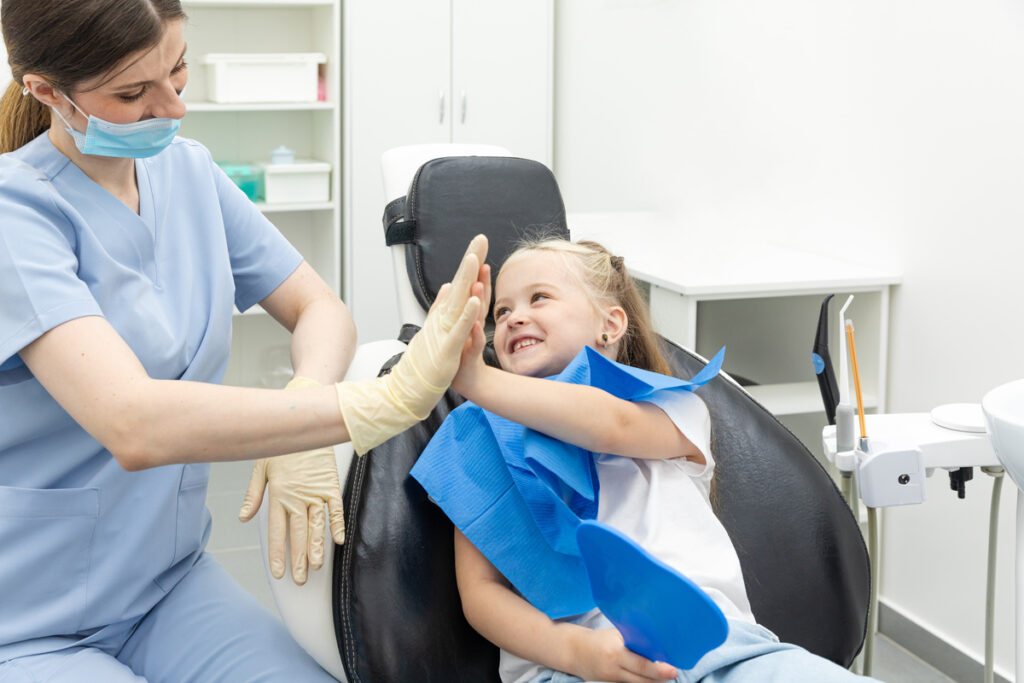
Walk into a pediatric dental office and the difference is immediate. The chairs are smaller, the décor is designed to spark curiosity and calm, and the entire team is trained to speak to children in a way that builds trust rather than fear. At Kids Dental Center, we put serious thought into every corner of our office because we know the environment shapes the experience.
Here are a few things parents can expect from a practice built specifically for kids:
- Child-sized equipment: Instruments, chairs, and tools are sized and designed with little mouths in mind for a safer, more comfortable experience.
- Age-appropriate communication: The team knows how to explain procedures to a curious six-year-old very differently than to a nervous teenager.
- Behavior guidance options: From distraction techniques to sedation dentistry for children who need it, there are thoughtful tools available at every level of anxiety.
- Developmental oversight: Every visit includes monitoring of growth milestones, not just a check for cavities.
This approach is what makes a pediatric dental visit feel entirely different from sitting in an adult office, and it is why so many families drive across town to find the right fit.
Why It Matters to Start Early
The habits and feelings a child develops around dental care in their earliest years tend to stick. A child who has positive, comfortable experiences early on is far more likely to keep up with their oral health as a teenager and into adulthood. That is the bigger picture behind every child’s cleaning and exam and every gentle interaction during a visit. It is not just about today’s checkup; it is about setting a child up for a lifetime of healthy choices.
Pediatric dentists are also uniquely equipped to handle the unexpected. Whether it is a dental emergency from a tumble on the playground or a concern about a child with special health care needs, the training and environment are built to respond with care and competence.
Frequently Asked Questions About Pediatric Dentists vs. Regular Dentists
What extra training does a pediatric dentist complete that a general dentist does not?
After finishing dental school, a pediatric dentist completes a minimum of two additional years of residency training focused specifically on children, covering child psychology and development, behavior guidance, sedation and general anesthesia, care for children with special health care needs, and management of oral and facial trauma. A general dentist is not required to complete this additional residency.
At what age should my child start seeing a pediatric dentist instead of a general dentist?
Most pediatric dental organizations recommend a child’s first dental visit happen within six months of the first tooth erupting or by their first birthday, and a pediatric dentist can then continue caring for a child through adolescence. Starting early with a provider trained specifically for children helps build comfortable habits from the very first visit.
Can a general dentist still treat my child’s teeth?
A general dentist can provide routine care for children, and many families use one successfully, especially once a child is older and comfortable in a dental chair. The difference is training depth: a pediatric dentist completes additional residency training specifically in child behavior guidance, sedation, and treating kids with special health care needs, which can matter more for younger children, anxious patients, or more complex cases.
What behavior guidance techniques do pediatric dentists use with anxious kids?
Pediatric dentists are trained in evidence-based behavior guidance ranging from simple communication and distraction techniques to nitrous oxide and sedation for children who need extra support. The goal of every technique is to help a child feel safe during the visit, not just get through the appointment.
Does a pediatric dentist do more than check for cavities?
Yes. Beyond checking for cavities, a pediatric dentist monitors how a child’s teeth, jaw, and bite are developing over time, watches for early orthodontic concerns, and tracks habits like thumb-sucking or prolonged pacifier use that can affect growth. This developmental oversight is built into every visit, not just added when a problem comes up.
Choose Kids Dental Center for Your Child’s Dental Home
At Kids Dental Center, we understand kids are unique, individually different, and face challenges adults simply do not. Our team brings the knowledge, research, education, and experience to tailor every single visit to meet your child’s needs, and we work hard to make sure coming to the dentist feels like an adventure rather than something to dread. We accept most insurance plans and offer multiple financing options because we firmly believe access to excellent pediatric dental care should never be limited by background or budget.
Choosing a pediatric dentist is one of the best decisions a parent can make for their child’s long-term health and happiness. If you are ready to find a dental home where your child is truly seen, heard, and cared for, we would love to meet your family. Contact Kids Dental Center today to schedule an appointment and experience the difference for yourself.